As a clothing brand grows, adding custom belts to your product line is a common next step. But one of the first questions buyers ask is: "What's the smallest number I have to order?" This article explains why minimum order quantities (MOQs) exist for belts, what affects this number, and how you can work with it.
1. What is MOQ?
For belt manufacturing, MOQ is simply the smallest number of custom belts a factory will make for you. This number is not random. It changes based on the materials you choose, the type of logo you want, and the packaging you need.
2. Why Factories Have MOQs
Factories don't set MOQs to be difficult. They do it to keep their business running and keep prices fair for you.
Cover Basic Costs
Materials: If you want a rare leather color, the factory has to buy a whole roll—not just one meter. If your order is too small, the extra material sits unused, and you'll pay much more per belt.
Molds & Setup: Unless you use simple laser engraving on a standard buckle, custom logos (like embossing or metal plates) need a custom mold. Making that mold costs the same whether you order 100 belts or 1,000. With a small order, the mold fee might even cost more than the belts themselves.
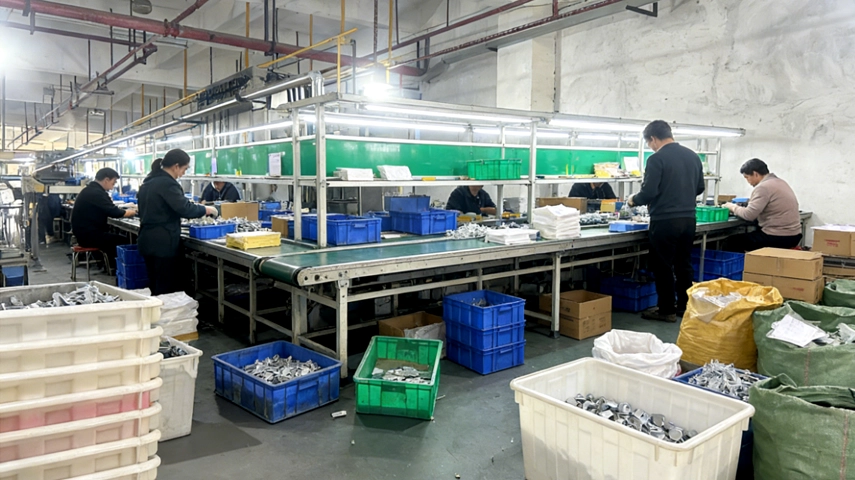
Labor: Setting up the production line takes time. Workers need a few belts to get used to the work. If your order is very small, they finish just as they start working efficiently. This inefficiency makes costs go up, and you end up paying for it.
Supply Chain Flow
Smooth Production: A steady, larger order lets workers stay focused and fast. Small, on-again-off-again orders break their rhythm and lead to more mistakes.
Suppliers Have Rules Too: Factories don't make everything themselves. Raw material suppliers also have their own MOQs. The belt factory must meet those minimums just to get the parts for your belts.
Quality Checks: It's easier and cheaper to check 500 belts in one batch than 10 separate batches of 50. Checking in bulk catches problems faster.
3. MOQ Based on Belt Type
MOQ numbers vary a lot depending on what you want for your belts.
By Material Type
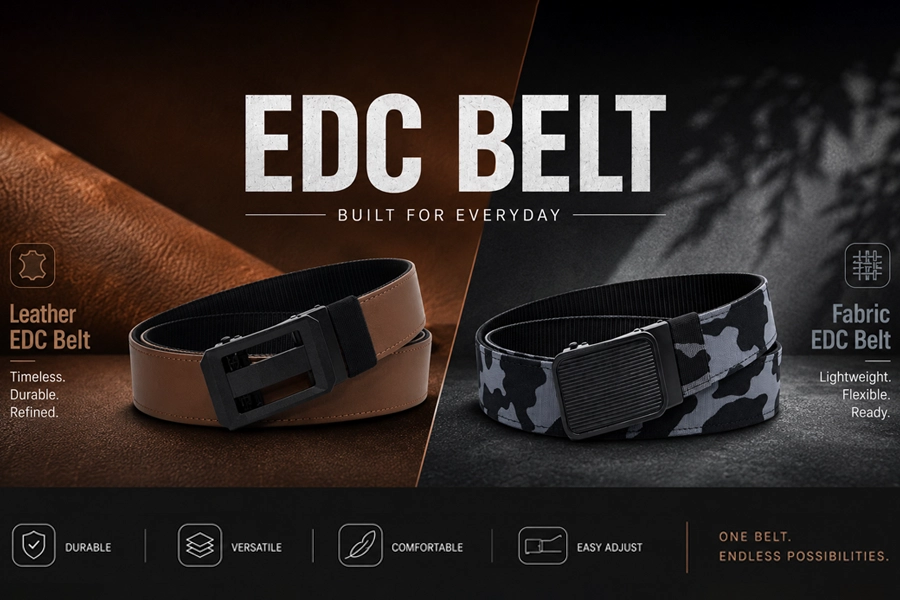
Leather Belts: Cutting leather creates a lot of waste, and molds are expensive. MOQ is usually 100 to 500 belts.
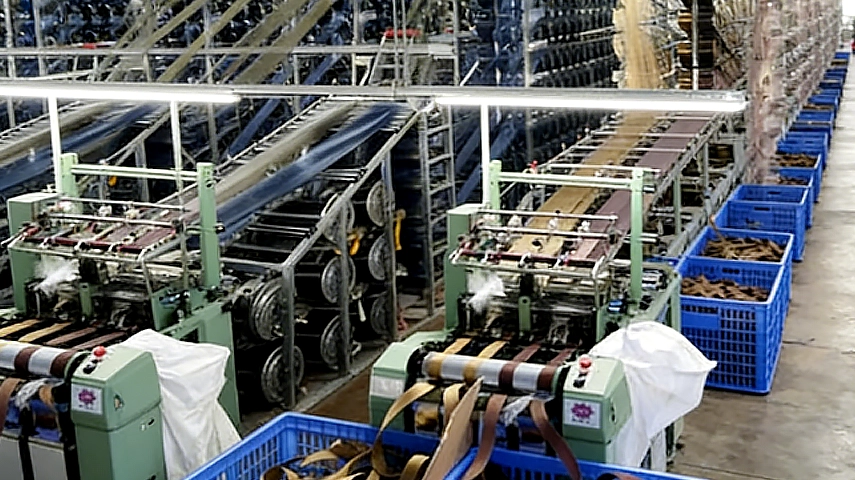
Fabric Belts: If you use common, in-stock webbing, MOQ can be low. But if you want a fully custom color and weave, the mill makes large batches. Expect 1,000 to 3,000 belts for something completely new.
Metal or Unique Materials: The rarer the material, the higher the MOQ.
By Customization Level
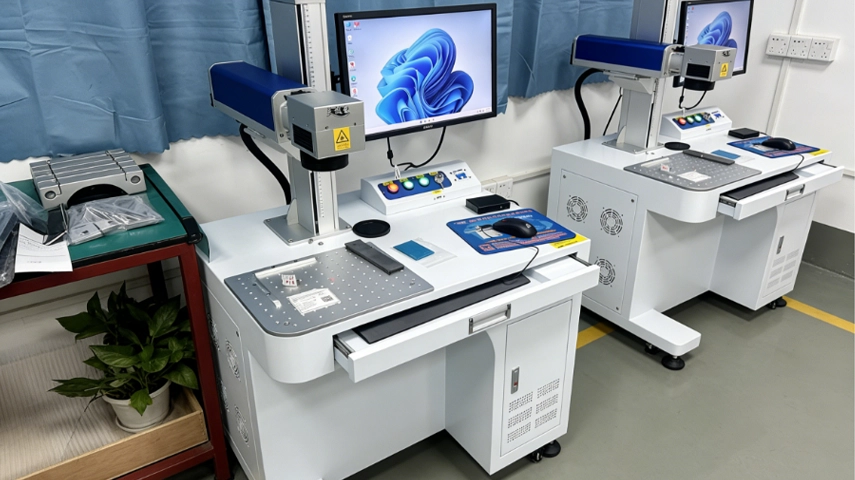
Simple (Laser on Standard Buckle): This is easy. The factory takes a standard belt and etches your logo. MOQ is usually 50 to 100 belts.
Complex (Custom Buckle Shape or Full Print): This needs new molds and setup time. MOQ is typically 300 to 1,000 belts.
By Factory Size
Large Factories: They have higher costs to run. MOQ is higher (500–1,000+ belts). They're best for big brands that need consistent, large orders.
Small/Mid-Size Shops: They're more flexible. MOQ can be 50 to 100 belts. Great for startups or testing small batches.
Mixing Different Parts
What if the buckle MOQ is 300 but the strap MOQ is 500?
The total MOQ is usually the higher number—so you'd need to order 500 belts.
But a good factory might let you use 300 buckles now and store the extra 200 for future orders. Always ask if this is possible.
Long-Term Relationships
If you're a repeat customer with other profitable orders, factories are much more willing to help with a small "problem" order. They see it as a partnership, not just a one-time deal.
4. Tips for Buyers
Know Your Numbers
Be honest about how many belts you can sell. Don't design a belt that requires 1,000 units if you only sell 50 a month—you'll end up with a warehouse full of unsold belts.
Match the Factory to Your Order
Small order? Choose a small, flexible workshop.
Big order? Go to a large manufacturer.
Talk It Out
If the MOQ is too high, ask why. You could say: "I get that the MOQ is 300 because of the custom buckle mold. If we use a standard buckle and just laser the logo, would the MOQ drop to 100?"
Good sales people will help you adjust the design to fit your budget and quantity.
5. Common Myths
Myth: MOQ is fixed.
Reality: It changes.
Factories adjust their minimums all the time. If a factory is busier, they might raise MOQ—they can't waste time on small orders.
On the other hand, if a factory is slow, they might lower their MOQ to attract more business.
Sometimes, a supplier’s MOQ goes up, which forces the belt factory to raise theirs too.
Myth: Lower MOQ is always better.
Reality: There's a trade-off.
Limited Design: You can only use simple logos. Your belt might look like everyone else's.
Higher Price: The cost per belt will be much higher.
Expensive Shipping: A box of 50 belts is costly to ship by air. It's too small for cheap sea freight, so shipping eats into your profit.
Myth: All factories have the same MOQ for the same belt.
Reality: No two factories are the same.
A big factory spends more to stop and start their line than a small shop. Their supply chains are different too. Always get a few quotes to compare prices and MOQs.
6. Final Tips
MOQ isn't a trick to get you to buy more. It's how factories make sure your belts are well-made and priced fairly. The goal is to find a balance between your design ideas, the number of belts you actually need, and the right factory partner.
7. FAQ
Q1: Can I negotiate MOQ with a factory?
A: Yes, you can. Many factories are flexible, especially if you're willing to adjust small details (like using a standard buckle instead of a custom one) or build a long-term relationship. Always ask—most will work with you to find a solution.
Q2: If I order more than the MOQ, will the price per belt go down?
A: Usually, yes. When you order more belts, factories can spread their costs (like mold fees and setup time) over more units. This often leads to a lower price per belt for larger orders.
Q3: What if I need a small test order before a big MOQ?
A: Many small or mid-size factories will let you place a small test order (even below their usual MOQ) to check quality. Explain that you plan to order more later—this helps them see the long-term value of working with you.
Q4: Do MOQs include different sizes or colors?
A: It depends on the factory. Some will let you mix sizes or a few colors within the total MOQ. Others require the same size/color for the minimum order. Always ask the factory about their policy before placing your order.
Q5: How long does production take after I meet the MOQ?
A: Production time varies, but it's usually 2–4 weeks for standard custom belts. If you have complex customization (like custom molds), it may take 4–6 weeks. Ask the factory for a clear timeline when you discuss MOQ.