Introduction
Now when consumers buy a belt, they need more than just practical use. They also want belts to help with fashion matching and create their personal style.
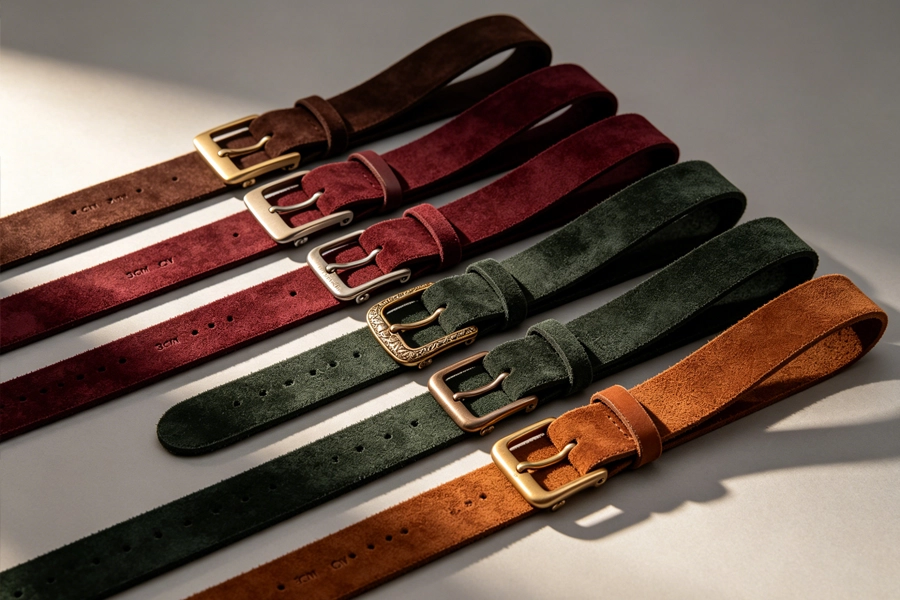
Suede belts have a unique matte texture, soft touch and retro appearance. Because of this, they are becoming more and more popular among consumers.
Whether you attend a business event or dress casually, a high-quality suede belt can add a sense of luxury and layering to your overall look.
For helps buyers better understand and purchase the products. This article will fully explain suede belts and covers their nature, production process, characteristics, selection, maintenance and matching.
1.Definition of Suede
1.1Basic Definition
Suede is made by carefully sanding and napping the flesh side of animal leather (the side that touches the animal's muscles).
Unlike traditional smooth leather, which uses the grain side (surface) of the leather, suede uses the reverse side of the leather. That is why it is called "suede".
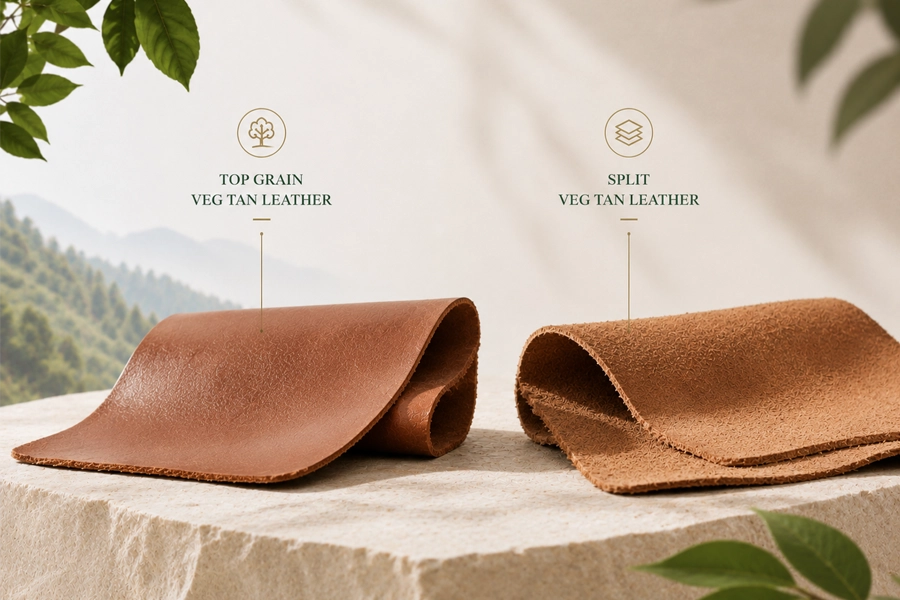
1.2 Differences Between Top-Grain Suede and Split Suede
There are two main types of suede on the market: top-grain suede and split suede. They have obvious differences in quality and performance:
| Items | Top Grain Suede | Splite Suede |
|---|---|---|
| Raw Material Source | Complete top-grain cowhide, no layered cutting | The lower flesh side after cowhide is split |
| Fiber Structure | Fiber structure is finer and tighter | Fiber structure is relatively loose |
| Tensile Strength | High, good durability | Low, easy to tear |
| Velvet Texture | Longer, smoother velvet with obvious reverse velvet effect | Shorter velvet, slightly poor texture |
| Price Range | Mid-to-high end | Mid-to-low end |
| Applicable Scenarios | High-quality belts | Ordinary belts |
When top-grain suede is made of calfskin from 4 to 6-month-old calves, it is called "Reverse Calf Suede". It is recognized as the top suede material in the industry. It has shorter velvet and a unique silky texture.
1.3 Comparison with Other Similar Materials
The specific differences between suede, nubuck and chamois leather are as follows:
•Suede vs Nubuck: Suede uses the reverse side of the leather; therefore, its nap is longer and more noticeable. On the other hand, nubuck is made from the front side of the leather that has been lightly sanded. As a result, its surface is relatively flat, with only a slight velvety feel.
• Suede vs Chamois Leather: Traditional chamois leather specifically refers to leather from deer. It has an extremely delicate and soft texture.
But real deer leather is very rare and expensive now. Most "chamois leather" on the modern market refers to high-quality cow suede.
2. Production Process of Suede Belts
2.1 Raw Hide Pretreatment
This is the first step in suede production. It determines the basic quality of the leather:
1. Soaking and De-fleshing: Soak the raw hide in water to remove muscles, fat and blood.
2. Degreasing and Dehairing: Use chemical agents to remove oil and hair from the hide.
3. Liming and Softening: Make the leather fibers expand and loosen for subsequent processing.
4. Acid Soaking and Tanning: This is the most important step. It uses tanning agents to turn raw hide into leather that does not rot easily.
2.2 Napping Process
The napping process is the core link. It directly affects the final texture:
• Use a special leather sanding machine with sandpaper of different meshes.
• Sand step by step from coarse to fine. Control the velvet length between 0.3 and 0.5 millimeters.
• Fine napping requires uniform velvet, consistent length and no obvious sanding marks.
• Top-grain suede only needs single-sided napping. While split suede needs double-sided treatment.
2.3 Dyeing and Fatliquoring
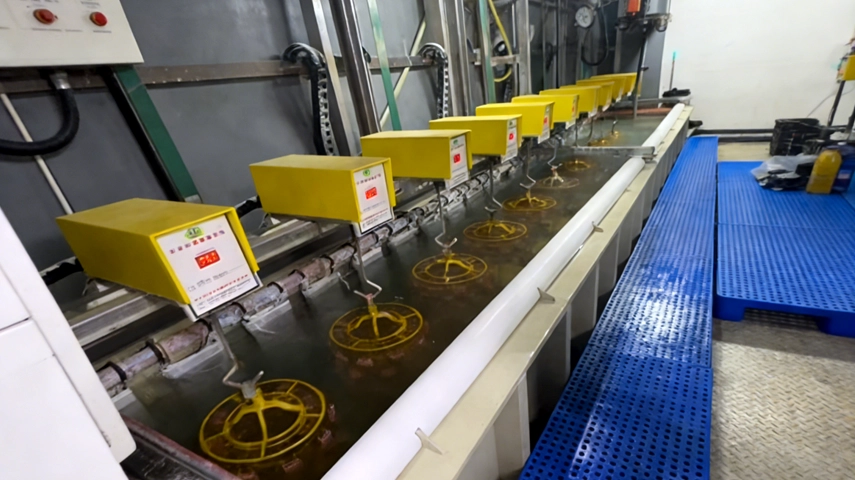
• Adopt dipping process to penetrate dye into the leather fibers.
• Fatliquoring treatment increases the softness and toughness of the leather. It prevents cracking.
• High-quality suede needs multiple dyeing and fatliquoring steps. This ensures uniform color and comfortable hand feel.
2.4 Belt Forming Process
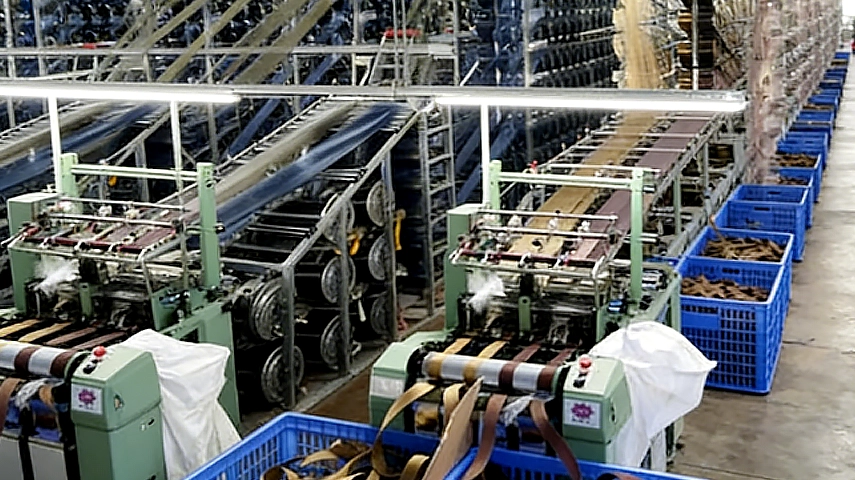
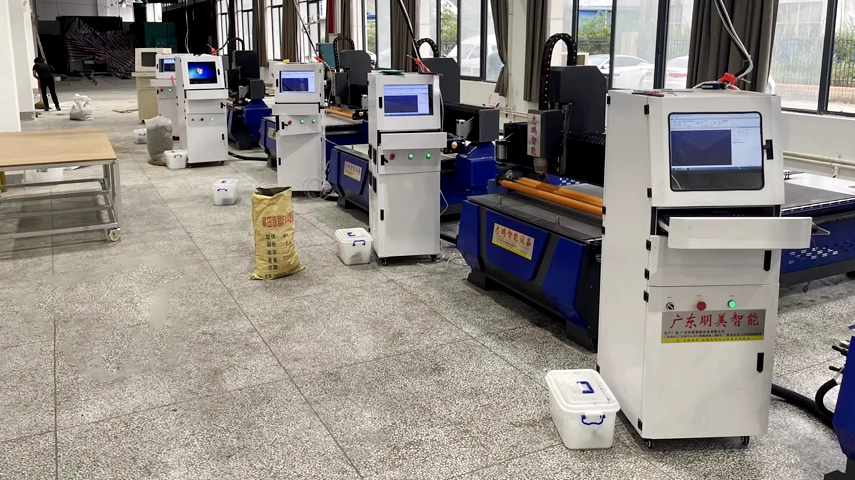
1. Cutting: Precisely cut leather strips according to the designed size.
2. Edge Treatment: Sand the edges and seal them. This prevents fraying.
3. Punching/Ratchet: Use a special punch to make holes. Or sew a ratchet.
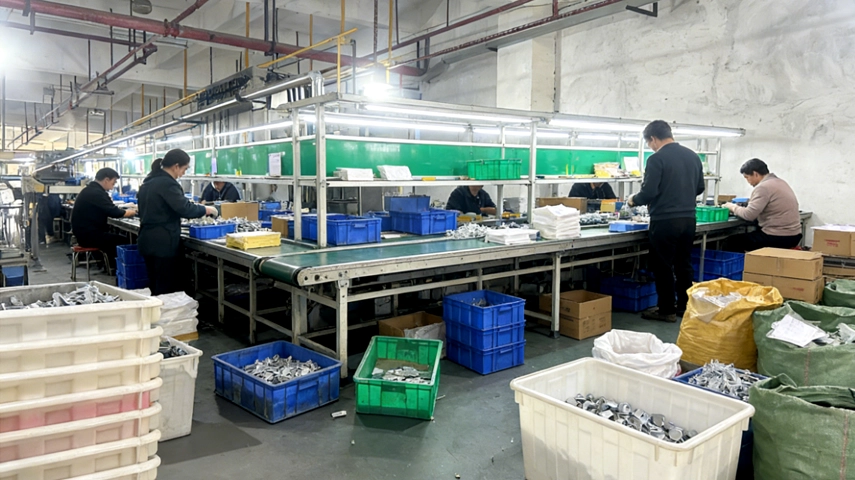
4. Buckle Installation: Fix the metal buckle to one end of the belt.
5. Quality Inspection: Check the stitches, edges and overall flatness.
3. Core Characteristics of Suede Belts
3.1 Advantages
1. Unique appearance and texture:
Suede possesses a soft, matte finish that lacks the harsh glare of smooth leather.
As a result, it exudes a more understated, luxurious vibe.
In addition, the delicate nap on its surface shifts with the angle of the light and the direction of your touch, thereby creating a unique, color-changing 'two-tone' effect that is highly visually appealing.
2. Excellent breathability:
Since there is no coating on the surface, the fiber gaps are completely open.
According to actual measurements, the air permeability of suede belts can reach 35–55 mm/s, representing a performance that is much higher than ordinary belts (5–12 mm/s).
Ultimately, this superior breathability ensures that suede belts are more comfortable to wear in summer and far less likely to feel stuffy.
3. Skin-friendly and comfortable experience:
The fine velvet on the surface of suede is soft to the touch.
It will not produce harsh friction when in contact with the skin.
Thicker suede belts can also effectively relieve the sense of restraint when worn for a long time.
They reduce waist marks.
4. Good wear resistance:
Although the surface looks soft, suede actually has excellent wear resistance.
Its fiber structure is tight. It can withstand friction and pulling in daily use.
Its service life is longer than many synthetic materials.
5. Retro and fashionable style:
Thanks to its natural retro vibe, suede can easily integrate into various dressing styles. In fact, it works perfectly with everything from classic American casual to modern business attire.
3.2 Disadvantages
1. Easy to absorb dust and stains:
The suede structure is easy to absorb dust and small particles in the air.
Liquid or oil can quickly penetrate into the leather. Once stained, it is difficult to remove.
2. Easy to deform and fade when wet:
Suede is not suitable for humid environments.
When placed in an environment with 90% relative humidity for 48 hours, the area expansion rate is about 1.8%-2.3%.
When wet, it will not only deform but also fade, affecting the appearance.
3. Velvet is easy to wear:
After long-term use, the velvet in frequently rubbed areas (such as around the holes and the inner side of the belt) will gradually wear out.
It will appear "bald spots", and this wear is difficult to repair.
4. Needs special care:
Smooth leather only needs regular oiling for maintenance.
But suede needs special cleaning tools and care products. The maintenance process is relatively complicated.
4. How to Choose a Suede Belt?
4.1 Material Identification
1. Judgment by vision
• High-quality suede: The nap is uniform and fine, with a perfectly consistent length. At the same time, the color is natural and soft, highlighted by a highly pronounced 'two-tone' shading effect.
• Low-quality suede: The velvet is sparse and uneven, with clumping. The color is dull and lusterless.
• Synthetic suede: The nap is too uniform, meaning it lacks the subtle differences found in natural leather. As a result, the hand feel is quite stiff.
2. Judgment by touch
- High-quality suede feels soft and smooth, with a warm feeling.
- It will leave a short-term indentation when pressed lightly with fingers, then slowly recover.
- There should be no obvious velvet loss when rubbed.
3. Judgment by burning
• Natural suede will produce a smell similar to burning hair when burned. The ash is powdery.
• Synthetic materials will produce a pungent plastic smell when burned. The ash is hard.
4.2 Judgment of Process Details
1. Edge treatment: The edges of high-quality belts are perfectly smooth after sanding. Furthermore, the edge finishing is uniform and firm, ensuring there is no fraying or cracking.
2. Stitch quality: The stitches are neat and uniform, with perfectly consistent spacing. Consequently, there is absolutely no skipping, breaking, or exposed thread ends.
3. Hole punching process: The holes should be round and smooth. The edges are reinforced, not easy to deform or tear.
4. Buckle quality
• The metal buckle should have a smooth surface and uniform plating. There are no scratches or bubbles.
• It opens and closes smoothly, with a firm buckle.
• The color of the buckle should be consistent with the overall style of the belt.
4.3 Selection of Size and Width
1. Length selection: The appropriate length of the belt should be waist circumference + 15-20 centimeters.
This way, the remaining tail can pass through the first belt loop after being fastened. It is both beautiful and practical.
2. Width selection
- Men's daily use: 3.5-4 cm
- Women's daily use: 2.0-3.0 cm
- Formal occasions: 2.5-3.5 cm
- Casual occasions: 3.5-4.5 cm
4.4 Color and Buckle Matching
1. Classic colors
- Black: Suitable for formal occasions and cool-toned clothes
- Brown series: Suitable for warm-toned clothes
- Dark gray: Modern style
2. Buckle matching principles
• The color of the metal buckle should be consistent with other metal accessories on the body (watch, necklace, cuffs, etc.).
• Silver buckle: Modern and fashionable. Suitable for matching with black and gray belts.
• Gold buckle: Retro and gorgeous. Suitable for matching with brown series belts.
• Matte buckle: Low-key and introverted. Suitable for business occasions.
5. Professional Maintenance and Care of Suede Belts
5.1 Daily Cleaning
- Frequency: It is recommended to do daily cleaning 1-2 times a month.
- Tools: Special suede brush (brass wire brush + rubber brush), soft bristle brush.
- Method: First, use a brass wire brush to gently brush off surface dust. Be careful to brush along the direction of the velvet.
Then use a rubber brush to remove stubborn stains and lint balls.
5.2 Waterproof Treatment
- Before first use: It is recommended to do waterproof treatment.
- Tools: Special suede waterproof spray.
- Method: Spray evenly 20-30 centimeters away from the belt in a well-ventilated place. Let it dry naturally before use.
- Frequency: Re-spray every 3-6 months, or after cleaning.
5.3 Handling of Common Stains
1. Dust and dry stains
• Just brush gently with a soft bristle brush.
• For more stubborn dry stains, gently wipe with a special suede eraser.
2. Water stains
• Immediately absorb water by pressing vertically with a clean paper towel or towel. Do not wipe horizontally.
• Let the belt dry naturally. Do not use a hair dryer with hot air or direct sunlight.
• After drying, comb along the direction of the velvet with a brush to restore the suede texture.
3. Oil stains
• Immediately sprinkle talcum powder or cornstarch on the oil stain. Let it stand for 24 hours.
• Gently brush off the powder with a brush, and repeat several times until the oil stain fades.
• For serious oil stains, it is recommended to send them to a professional leather care shop.
5.4 Storage Method
• After cleaning and drying, wrap it in a dust bag for storage.
• Avoid folding for storage. It is best to hang it on a hanger.
• You can put a small amount of cedar chips in the dust bag. It can prevent moisture and insects.
• Store in a dry and ventilated place. Avoid direct sunlight and high temperature and humidity environments.
5.5 Care Mistakes
- Soak and clean directly with water.
- Scrub hard with a hard bristle brush or steel wool.
- Use alkaline cleaners such as washing powder and soap.
- Care suede by ordinary shoe polish.
- Bake with a hair dryer's hot air or heating.
6. How to Match a Suede Belt
Choose the right suede belt to match your clothing products.
6.1 Men's Matching
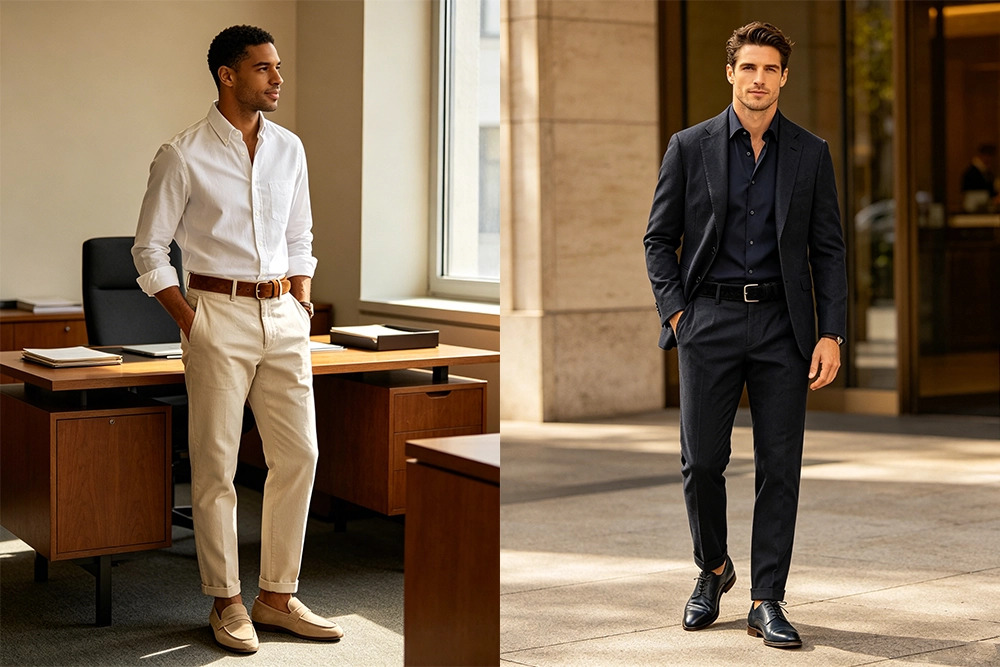
1. Business casual style
• Brown suede belt matching: Khaki casual pants / white shirt / light-colored loafers.
• Black suede belt matching: Black suit pants / dark blue shirt / dark-colored derby shoes.
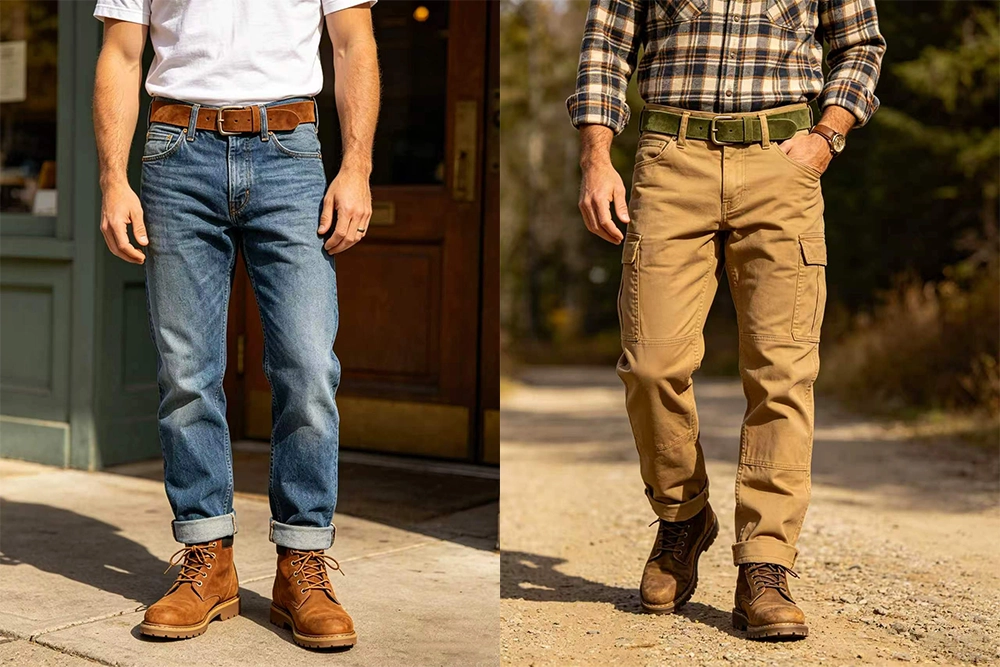
2. American casual style
• Brown suede belt matching: Blue jeans / white T-shirt / brown work boots.
• Olive green suede belt matching: Khaki work pants / plaid shirt / Martin boots.
The matte texture of suede can neutralize the toughness of jeans and workwear.
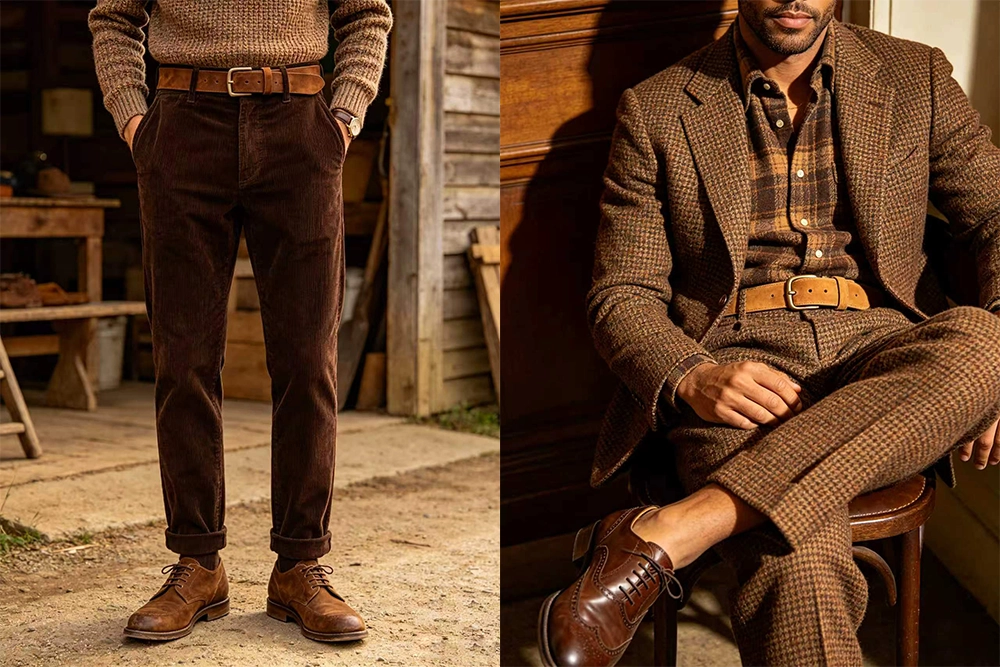
3. Retro style
• Dark brown suede belt matching: Corduroy pants / knitwear / retro leather shoes.
• Camel suede belt matching: Tweed suit / flannel shirt / brogues.
6.2 Women's Matching Guide
Choose the right suede belt to match your clothing products.
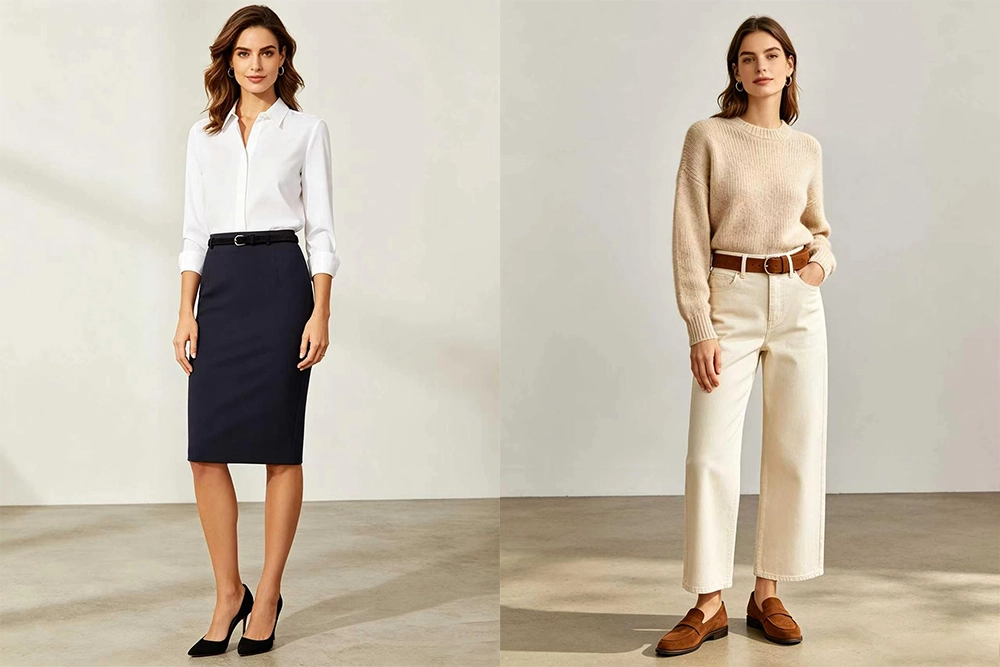
1. Daily work style
• Thin black suede belt matching: Dark-colored pencil skirt / white shirt / black high heels.
• Brown suede belt matching: Light-colored wide-leg pants / beige knitwear / brown loafers.
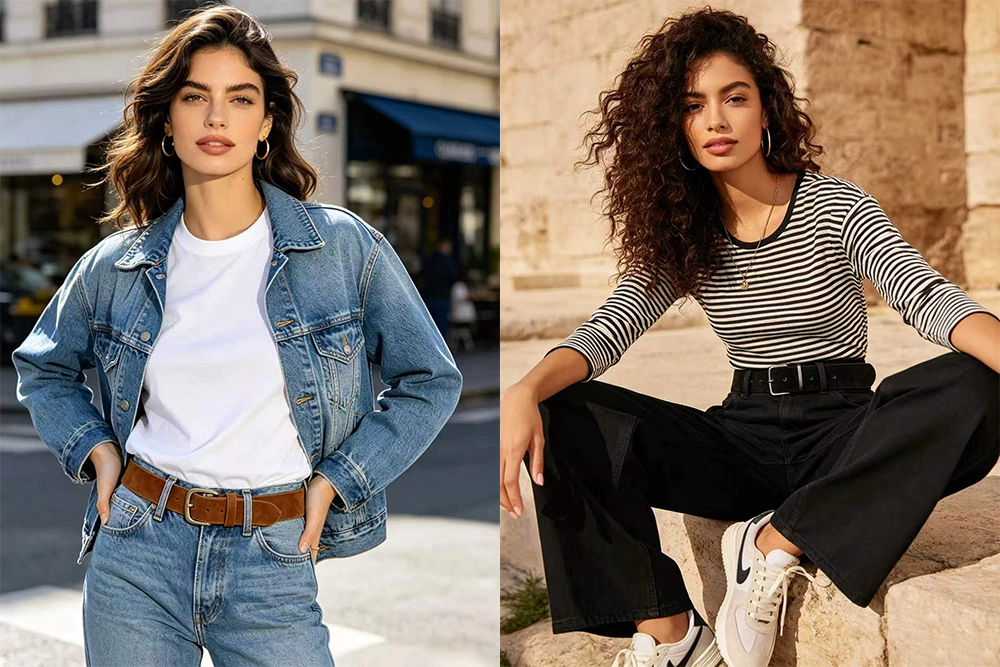
2. Casual fashion style
• Brown suede belt matching: High-waisted jeans / white T-shirt / denim jacket.
• Black suede belt matching: Black wide-leg pants / striped top / sports shoes.
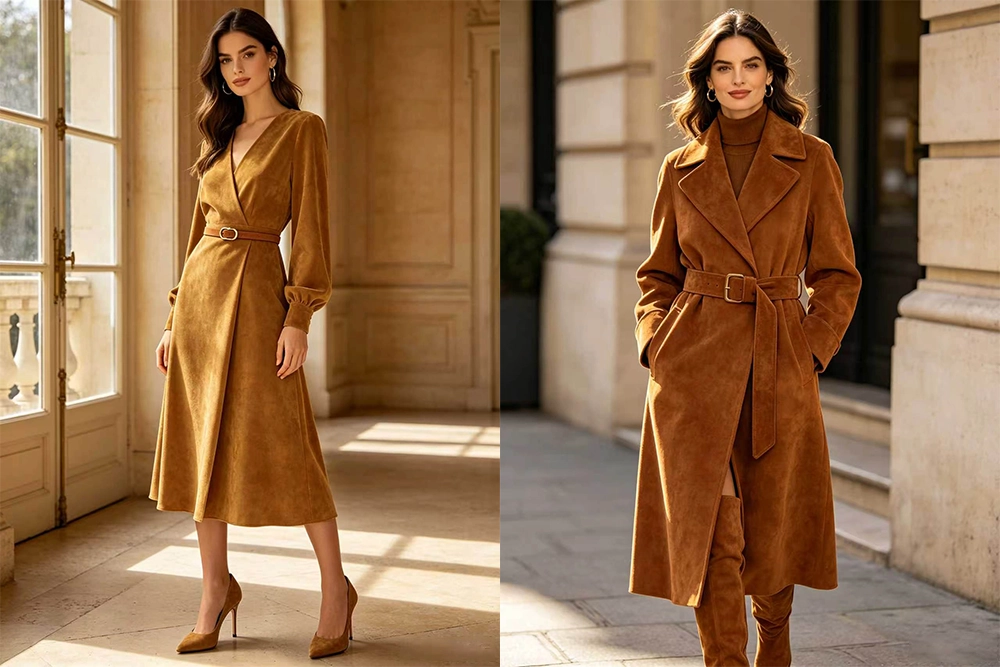
3. Elegant lady style
• Thin suede belt with gold buckle matching: Dress / high heels.
• Wide suede belt matching: Long coat / long boots.
Conclusion
Suede belts inherently possess a captivating vintage aesthetic and an effortless sense of high fashion. With their rich, velvety texture and timeless appeal, they seamlessly bridge the gap between classic elegance and modern trends. Whether paired with casual denim or tailored trousers, suede accessories instantly elevate an outfit, making them a highly popular and beloved wardrobe staple among today's discerning consumers.
As a professional brand manager or fashion buyer, you understand the importance of capitalizing on market trends with high-quality, reliable products. If you are looking to enrich your brand's current collection by introducing premium suede belts, navigating the crucial step of selecting the right belt manufacturer is essential.
We welcome you to reach out to our dedicated team at your earliest convenience. We are eager to share our industry expertise, provide customized manufacturing solutions, and offer the comprehensive support you need to bring exceptional accessories to your market.
7. Frequently Asked Questions (FAQ)
Q1: How long can a suede belt usually last?
Ultimately, the service life mainly depends on the material quality, as well as everyday usage and maintenance.
For example, a high-quality full-grain suede belt can easily last for 3 to 5 years with normal use and regular care.
Split suede belts usually last 1-2 years.
Frequent use, lack of maintenance, or frequent contact with water and oil will significantly shorten the service life.
Q2: Can suede belts be washed with water?
No.
First and foremost, washing suede with water will cause the leather fibers to expand and deform, ultimately leading them to harden and crack.
Additionally, it will cause severe fading. In fact, even slight spot cleaning with water may leave behind hard-to-remove water stains and noticeable color differences. Instead, the correct cleaning method is to use specialized suede cleaning products designed for dry cleaning.
Q3: Can worn suede belts be repaired?
Slight velvet lodging and local stains can be repaired with a special brush and color restorer.
But if there is large-area velvet wear (bald spots), leather tearing or serious deformation, it cannot be completely repaired.
This is an inherent characteristic of suede, so daily maintenance is particularly important.
Q4: Is it suitable to wear a suede belt in summer?
Yes.
Since the breathability of suede is much better than most smooth and synthetic leathers, it is more comfortable to wear in hot weather.
For optimal comfort, it is recommended to choose light colors (such as beige or light brown) and thinner styles, while avoiding dark colors that absorb heat.
Additionally, make sure to clean sweat stains promptly to prevent mold and odor.
Q5: Why are suede belts more expensive than ordinary smooth leather belts?
There are three main reasons.
First, suede has much stricter requirements for raw materials. Specifically, only full-grain leather with zero surface defects can be used to make high-quality suede.
Second, the production process is significantly more complex. For instance, steps like fine napping, along with multiple dyeing and fatliquoring stages, greatly increase production costs.
Finally, the rejection rate for suede is much higher. This is because even the slightest uneven sanding can lead to the scrapping of an entire hide.
Q6: How to quickly distinguish between real suede and artificial suede?
The most practical method is the three-step method of "looking, touching and smelling":
• Looking: Real suede has natural texture and subtle differences. While Artificial suede has too uniform velvet.
• Touching: Real suede feels warm and soft. While Artificial suede feels cold and stiff.
• Smelling: Real suede has a light leather smell. While Artificial suede has an obvious chemical plastic smell.
Q7: Is it normal for a new suede belt to shed a little velvet?
Yes.
Typically, a new suede surface will have some loose fibers left over from the production process.
To resolve this, you can gently brush it with a soft-bristle brush before use.
However, if it continues to shed a lot of fuzz after being used for a period of time, it indicates a low-quality product.
In such cases, it is likely made of split leather or artificial leather.
Q8: What should I do if my suede belt gets moldy?
First, gently wipe off the surface mold with a dry cloth. Then dry it in a well-ventilated and cool place (do not expose to the sun).
After drying, brush along the direction of the velvet with a brass wire brush. Then spray a layer of waterproof and anti-mildew spray.
If the mold has penetrated into the leather and left marks, it is recommended to send it to a professional leather care shop.
Q9: Can a suede belt be fastened very tightly?
This is generally not recommended.
While suede does have a certain amount of elasticity, long-term excessive stretching will cause the leather fibers to relax and deform, meaning it will eventually lose the ability to return to its original shape.
Furthermore, the surface fibers around the holes will wear down much faster due to frequent friction.
Instead, the ideal tightness is when you can still easily insert a finger after fastening.